
Chimney Cleaning & Sweeping: When You Need It and What to Expect
Chimney cleaning, also called chimney sweeping, removes soot, creosote, debris, and certain obstructions. Whether yours needs it depends on what has built up inside—not simply how long it has been since the last appointment.
If you are unsure what to book, ask for an inspection to establish whether cleaning is needed and confirm what each service includes. Wood-burning deposits and gas-appliance maintenance call for different work.
Does my chimney need cleaning?
Buildup or an obstruction is a reason to consider cleaning. An inspection helps establish what is there, where it is, and whether ordinary sweeping can remove it. Tell the professional what you burn, how often you use the fireplace or stove, and when it was last inspected or swept.
Mention changes you have noticed: deposits around the opening, debris falling into the fireplace, possible nesting material, smoky odors, or smoke that is not drawing up as expected. These are clues to investigate. They do not establish the cause or prove that sweeping will solve it.
A clean-looking firebox does not show you the condition of the whole flue—the passage that carries exhaust outside. If you recently bought the home or do not know its maintenance history, say so rather than estimating when it was last cleaned.
Ask the inspector to show you the buildup and explain the recommendation. Is the concern loose soot, a harder deposit, a blockage, or something that needs further examination? That answer is more useful than a cleaning recommendation based only on the calendar.
What does chimney sweeping remove?
Sweeping removes deposits and accessible debris from the areas included in the service. Depending on the system, that can mean soot, removable creosote, ash, leaves, or nesting material. Ask whether a blockage needs separate work and whether that work is included in the quote.
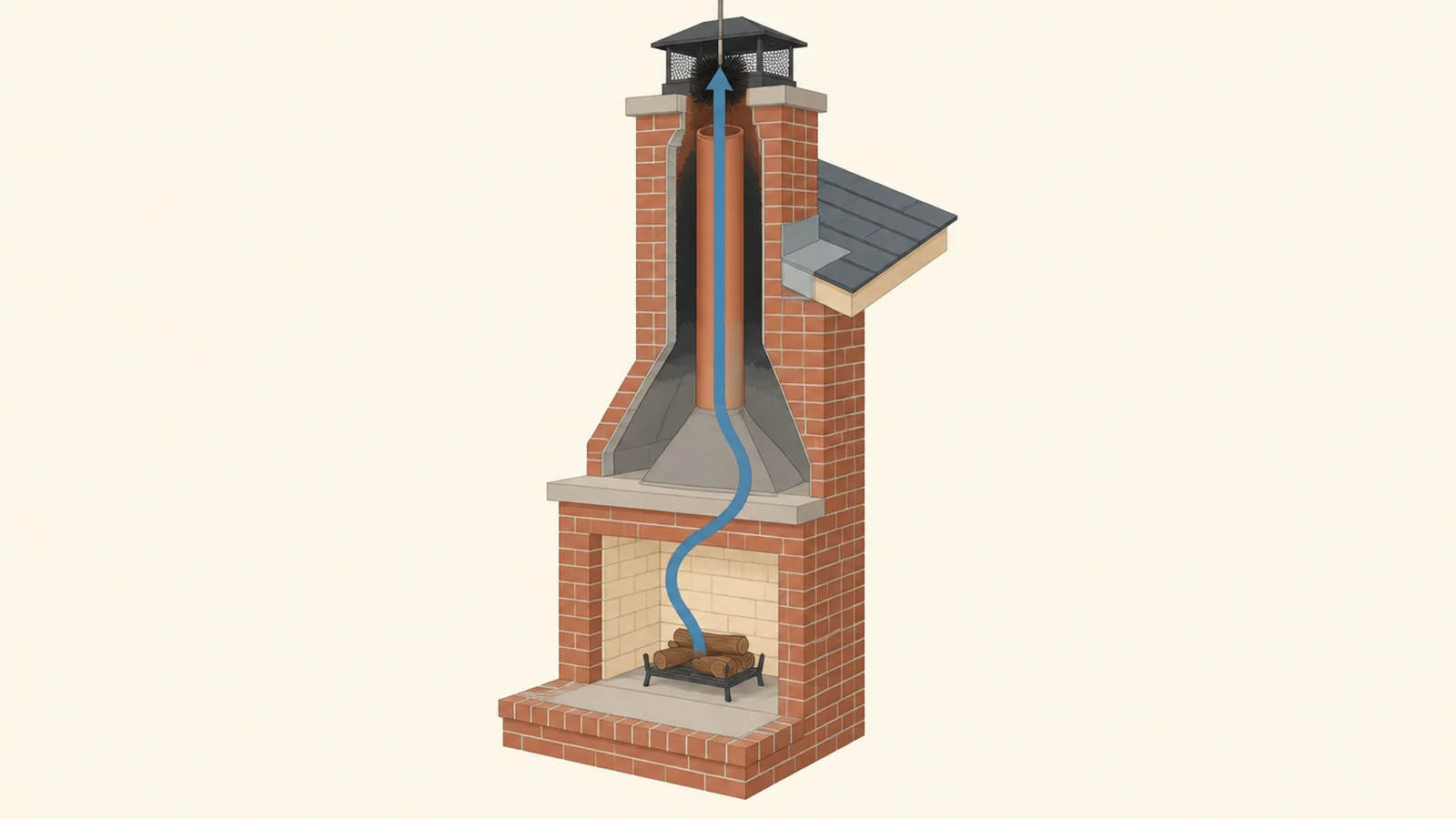
For a masonry fireplace, cleaning only the visible firebox is not a complete sweep. The flue and smoke chamber above the fireplace matter too. CSIA explains the cleaning scope.
| Condition | What to expect |
|---|---|
| Loose soot or removable deposits | Sweeping may remove them; ask which parts of the system are included. |
| Hard or glazed creosote | Ordinary brushing may not be enough. Ask about additional treatment and how remaining deposits will be assessed. |
| Debris or an obstruction | Removal may be needed. Confirm access and whether it is part of the booked service. |
| Cracked liner, deteriorated masonry, or water entry | Cleaning does not repair the defect. Ask for evidence and an explanation of the next evaluation or repair. |
A sweep does not rebuild a damaged crown, seal leaking flashing, replace a missing cap, or fix structural damage. Removing deposits and addressing a physical defect are separate jobs, even when one appointment brings both to light.
How often should a chimney be cleaned?
Arrange an annual chimney inspection, and base sweeping on the deposits, obstructions, use, and condition of your system. Annual inspection does not automatically mean every chimney needs the same cleaning work every year.
Annual checks with sweeping or repairs as needed are the approach described in CSIA’s maintenance guidance. Federal consumer advice is broader: the U.S. Fire Administration recommends annual professional cleaning and inspection. Treat that as a reminder to arrange maintenance, then ask what your particular system needs.
Your use and fuel help explain why deposits accumulate differently. Damp wood, restricted combustion air, and a cool chimney can encourage creosote buildup. EPA’s wood-burning guidance explains these factors. A fixed number of fires or cords of wood cannot tell you what is inside your chimney.
What about the 1/8-inch rule?
For masonry fireplaces, CSIA recommends sweeping at 1/8 inch of sooty buildup, or sooner if any glaze is present. It gives different guidance for factory-built fireplaces: clean when appreciable buildup is present. These are CSIA recommendations, not a universal legal threshold for every chimney or gas vent.
Ask the professional which guidance applies to your fireplace or appliance and what they observed. You do not need to measure deposits yourself or wait for a visible layer at the fireplace opening. Follow the maintenance instructions for your specific system, and discuss whether your use warrants checks between annual visits. For a system-by-system answer, see the complete chimney-cleaning frequency guide.
What happens during a professional chimney cleaning?
The exact work depends on the chimney, liner, appliance, access, and deposits. A useful quote identifies the flue and appliance being serviced and explains how the company handles anything beyond ordinary sweeping.
Before work starts
Share previous reports and describe any changes or concerns. Ask the company what access it needs and how long the appliance should be unused before the visit. Confirm the agreed cleaning areas, the inspection included, and when the technician will check with you about additional work.
During the sweep
Professionals use tools such as brushes, rods, or mechanical equipment suited to the system. Drop cloths and vacuum equipment help contain dislodged material and protect the work area. Access may be from above or below; roof access alone does not define a complete service. CSIA describes professional sweeping equipment, and its masonry inspection procedure addresses cleaning methods that avoid damaging the liner.
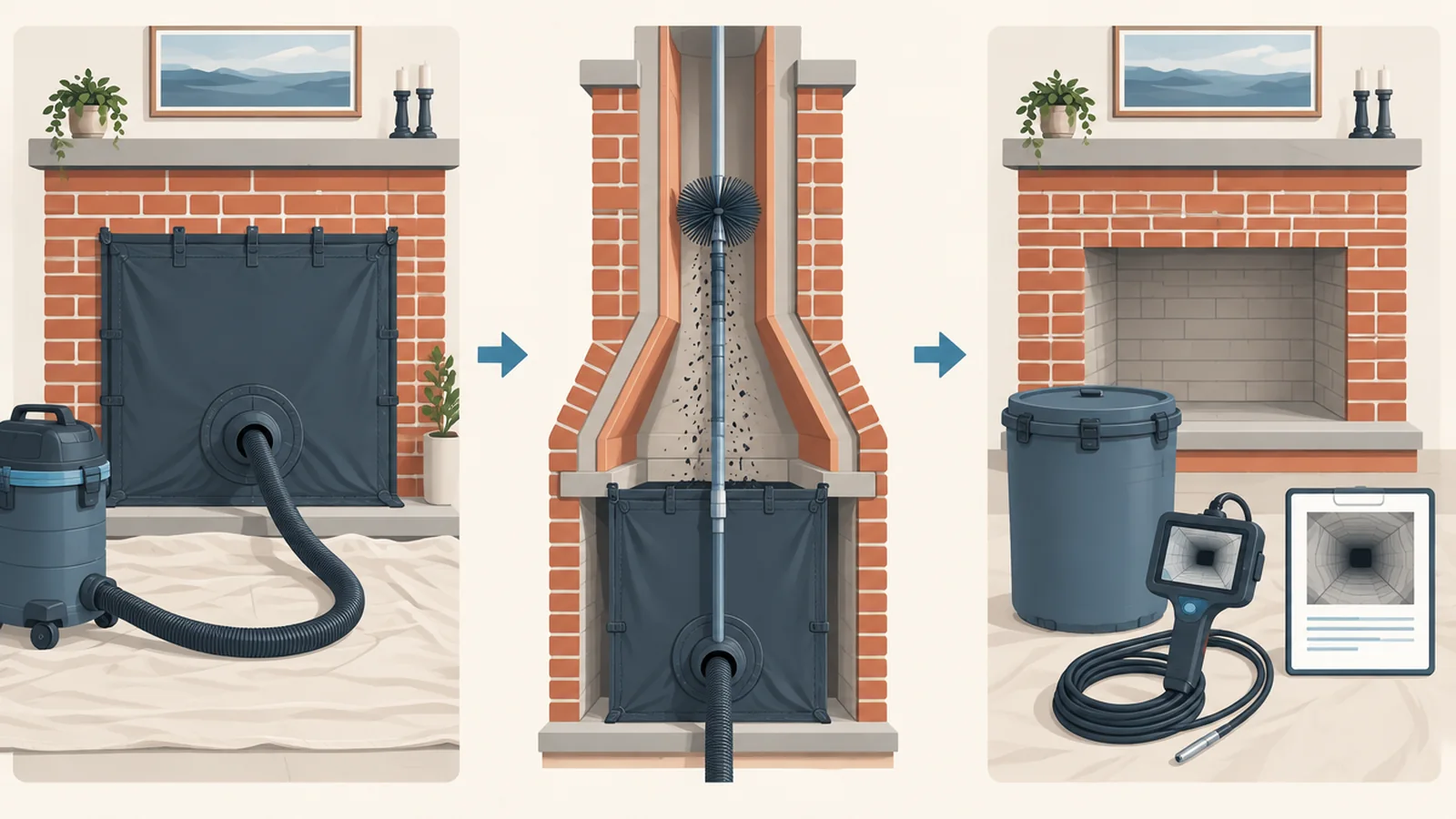
Ask how the crew will protect your room and collect removed debris. If difficult deposits or inaccessible areas change the work, ask for an explanation before agreeing to a different service. The equipment name alone does not tell you what was reached or removed.
Before the technician leaves
Ask what was cleaned, what remains, and whether anything could not be reached or evaluated. Request photos or written findings for concerns and a clear explanation of any follow-up. A receipt saying “chimney swept” should not leave you guessing whether an inspection is still needed.
What is creosote, and can normal sweeping remove it?
Creosote is residue from wood smoke that collects as combustion byproducts cool in the chimney. It can be flaky or crusty, sticky and tar-like, or shiny and hardened. More than one texture can be present in the same chimney.
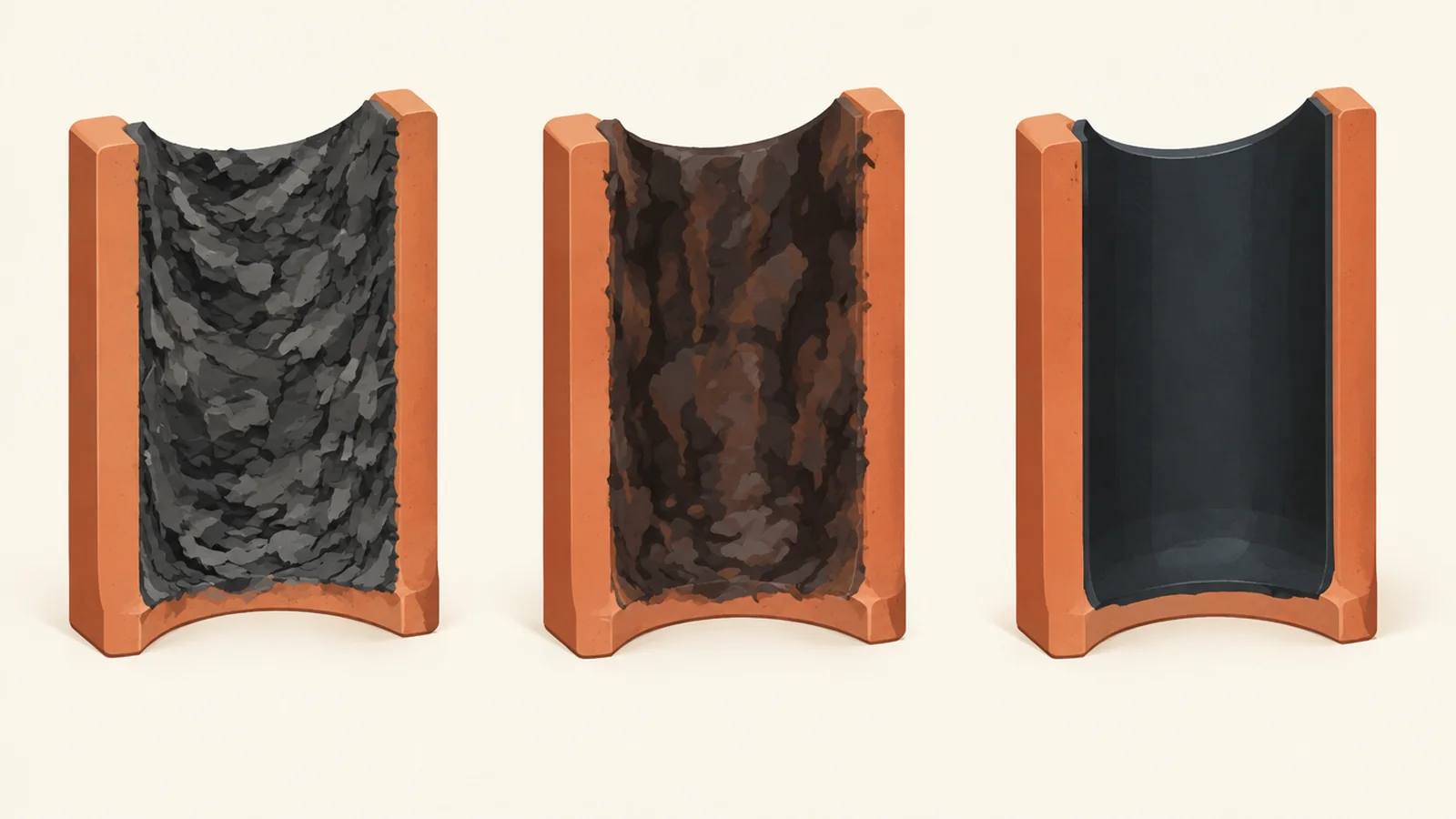
- Loose or flaky
- Sticky or tar-like
- Hard, shiny glaze
Creosote is combustible, so accumulated deposits can fuel a chimney fire. Its condition also affects removal: a loose deposit and a hard glaze do not respond the same way to cleaning. CSIA describes these different forms.
Ask the sweep to describe or show the deposit rather than relying only on a numbered “stage.” The practical questions are how much is present, where it is, what can remove it, and what will need examination afterward.
For a fuller explanation of formation, soot-versus-glaze terminology, and numbered-stage language, see What Is Creosote?.
Hard deposits and cleaning logs
Hard or glazed deposits may need specialized removal or professional treatment beyond a routine sweep. Chemical products and cleaning logs do not replace physical cleaning or inspection. Some treatments help prepare deposits for removal; they do not make the material disappear. CSIA explains the limits of chemical cleaners.
If additional treatment is proposed, ask why it suits your liner, whether more visits are expected, what costs are separate, and how the result will be checked. Do not assume buying a product completes the work described in an inspection report.
Does chimney cleaning include an inspection?
Cleaning removes deposits. Inspection evaluates condition. A company may offer them together, but booking “chimney cleaning” does not by itself establish that a particular inspection level is included.
Ask: “What inspection is included with the cleaning, and what will I receive afterward?” Use Cleaning vs. Inspection to compare bundled quotes, then see the Chimney Inspection Guide for the inspection levels, their limits, and what to look for in the findings.
Can a chimney be too dirty to inspect?
Yes. Deposits can hide surfaces that need examination. Cleaning may be necessary before the condition of the flue lining can be evaluated, as described in CSIA’s masonry inspection procedure. This is one reason cleaning and inspection may happen together or in sequence.
Ask which area was obscured and whether it was checked after cleaning. If deposits remain or access is limited, the report should make that limitation clear. A cleaner surface helps examination; it does not make concealed areas visible or guarantee that every defect has been found.
Do gas fireplaces or gas chimneys need cleaning?
Gas systems still need appropriate maintenance, but their service needs differ from the wood-smoke deposits discussed above. A gas appliance may need inspection, cleaning, or servicing of its appliance and venting even though it is not producing wood-burning creosote.
Blockages, debris, corrosion, and disconnected vent components are among the concerns a professional should check. CPSC recommends annual heating-system inspection and service, including checks of chimneys and flues. Cleaning an obstruction does not correct a damaged or disconnected vent.
Identify the appliance and use its manufacturer’s maintenance instructions. For example, the Heat & Glo Cerona manual covers vent obstructions and appliance maintenance separately. That model-specific guidance is not a cleaning schedule for every gas fireplace, furnace, or water heater.
When booking, give the make and model if available and explain whether you want fireplace servicing, chimney work, or both. Ask whether the company works on that system. A generic chimney-sweeping quote may not include the gas-appliance service you need.
What if the sweep finds damage or another problem?
A sweep may notice liner damage, deteriorating masonry, water staining, cap problems, unusual deposits, or evidence of a past chimney fire. Cleaning is not a complete diagnosis of every possible defect. The next step should follow from the finding.
For suspected liner damage, ask what further inspection is needed before considering liner repair. For signs of water entry, leak investigation should help establish the source. Heavy deposits may call for more removal work rather than a repair.
Ask the professional to identify the affected area, show the evidence, and separate what is confirmed from what is suspected. Have them explain whether the next step is cleaning, inspection, or repair—and whether the appliance should remain unused while the concern is resolved. A repair estimate should be supported by understandable findings.
After a known or suspected chimney fire
Do not resume using the chimney until a qualified professional has evaluated it and explained what is needed before reuse. Sweeping alone does not establish that fire damage is absent. CSIA’s post-fire guidance calls for cleaning and evaluation because damage may not be apparent from the fireplace or chimney top.
Tell the professional about a suspected fire before work begins. Evidence may need to be documented before deposits are removed, as noted in CSIA’s inspection procedure. Ask what inspection will follow and how the findings will be documented.
Questions to ask before booking a chimney sweep
Use these questions to clarify the service and compare quotes. Keep the answers with your appointment details so you can check them against the work and findings afterward.
- Which flue and appliance are you cleaning, and which parts of that system are included?
- What inspection is included, and what kind of report will I receive?
- How will you contain soot and debris and protect the room?
- What happens if you find hard or glazed deposits or an obstruction?
- Will you explain which areas could not be cleaned or properly evaluated?
- Will you show or document concerns and explain the recommended next step?
- Are additional treatment, blockage removal, or further inspection priced separately?
- What access and preparation do you need, and how long should the appliance be unused before you arrive?
General information, not an inspection or diagnosis. Confirm your situation with a qualified professional.
Find professionals near you
Choose a city to see published providers with documented coverage. When this guide has one clear service, the search starts with that service selected. Confirm the work and your ZIP code directly with the provider.
Sources and further reading
CSIA homeowner resources: sweeping thresholds and cleaning products
CSIA: Preventing chimney fires — inspection, deposits, and creosote
U.S. Fire Administration: Heating fire safety
CPSC: Carbon monoxide prevention and annual heating-system service
EPA Burn Wise: Wood-burning appliance questions (historical program resource)
CSIA Level 1 masonry chimney inspection procedure (2019 PDF)
CSIA: What to know after a chimney fire
Heat & Glo Cerona-36 / Cerona-42 manual: maintenance and venting (2020 PDF)